
Face recognition for events: every guest gets their own photos
Face recognition for events automatically sorts the event photos by who appears in them. The hosts get every photo from every source, and each guest gets a personal gallery with their photos only: a WhatsApp link, one selfie, done. PiciMe does it with no app and no signup, and the QR code at the venue is just another way to open the same link.

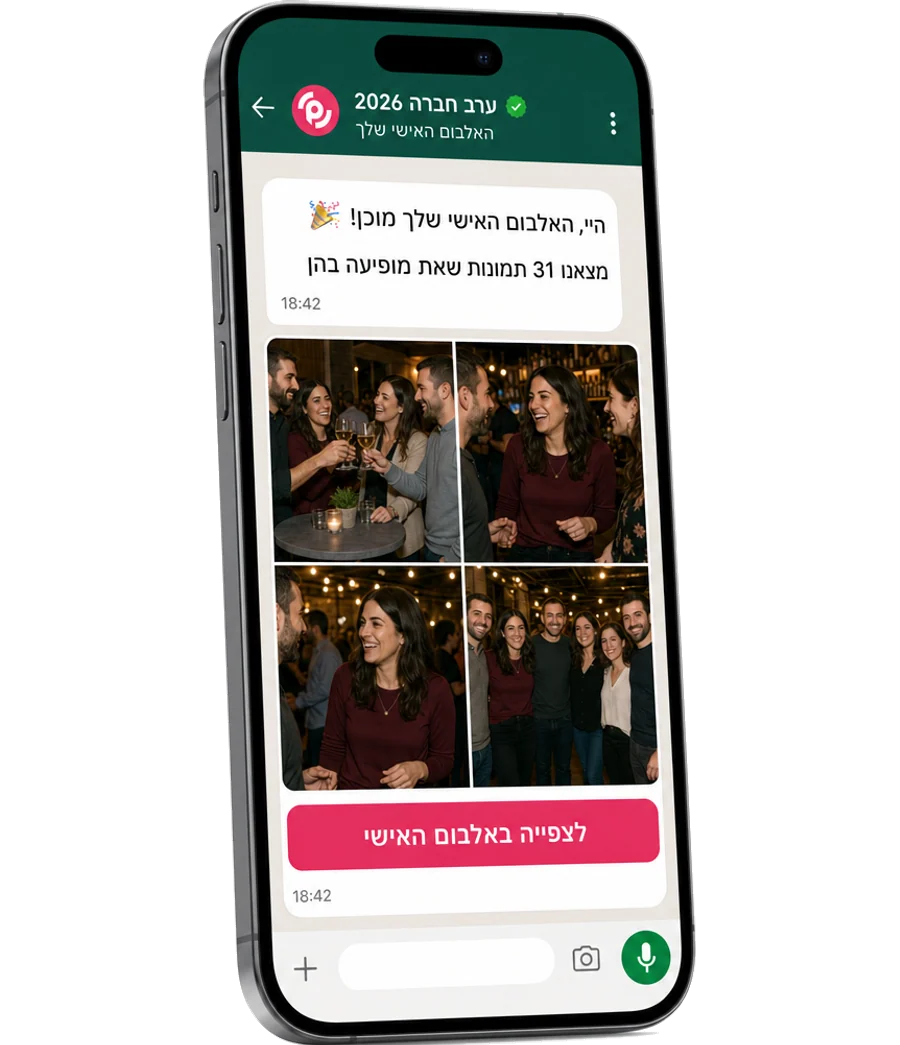
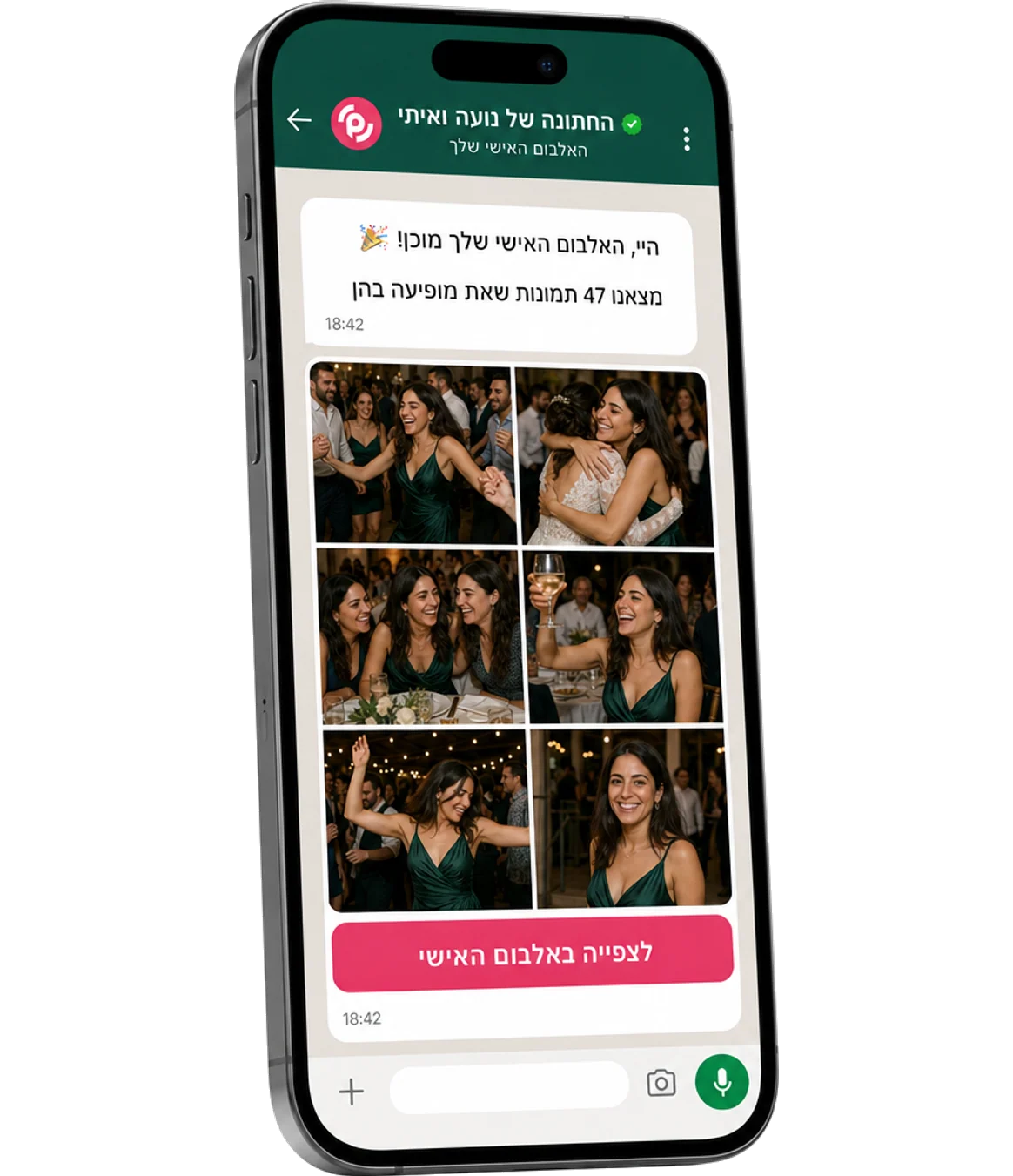
Three screens, on the guest’s phone
That is all the guest does. The hosts send us the guest list and we set the event up.
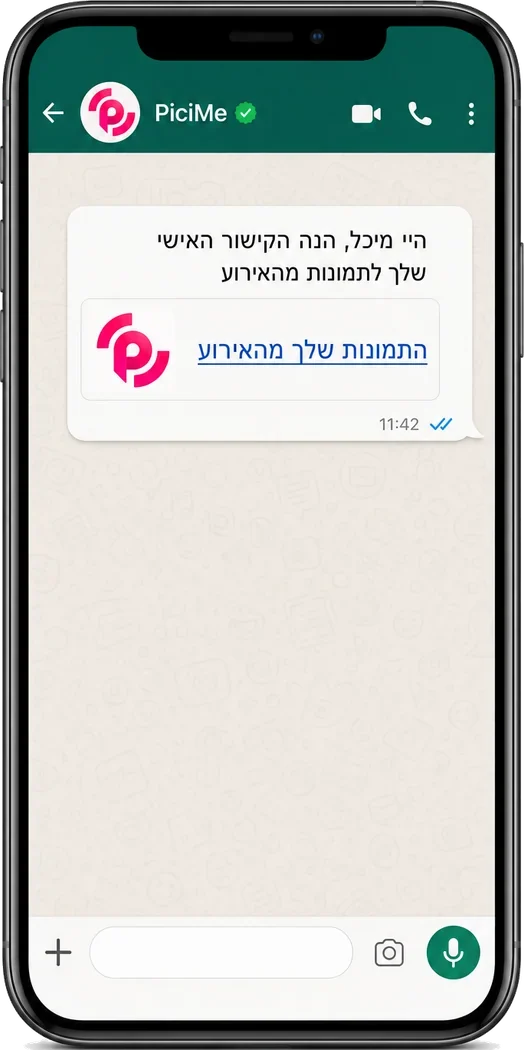
The link lands on WhatsApp
The message arrives in the guest’s WhatsApp with their personal event link. They tap it like any other message.
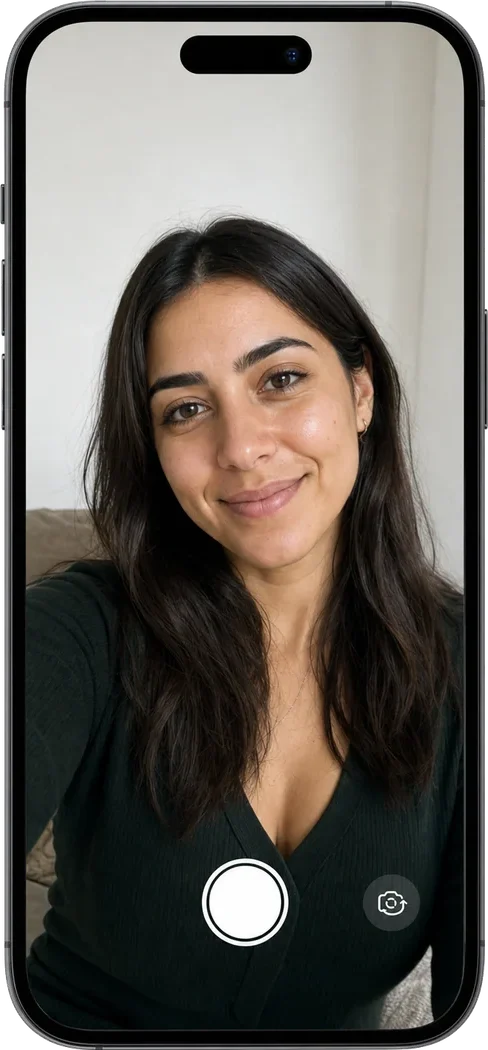
One selfie
One front-camera selfie, and the system knows who to look for. No form, no password, nothing to install.

The personal gallery opens on their phone
The gallery fills up as material is uploaded. Professional photographers’ photos come in once they finish editing and uploading, usually within two weeks.
The photos find the people, not the other way around
Hosts have one goal: every photo in one place. The guest has a different goal entirely: the photos they appear in, without scrolling through hundreds of photos of other people.
Automatic photo recognition covers everything uploaded to the event: the photographer’s photos if there is one, and photos guests took on their phones, if the hosts enabled guest uploads. Including photos nobody else would ever have seen.
It also takes work off the hosts. Nobody spends the week after the event forwarding photos one by one on WhatsApp.

Why photos never reach the people in them
Three familiar problems at almost every event.
Nobody sorts a thousand photos by people
After an event you are left with hundreds, sometimes thousands of photos. Even hosts who genuinely want to send each guest their photos never get through it. It is days of work.
A shared gallery gets opened once and forgotten
The guest opens the shared gallery, scrolls for two minutes, does not find themselves, and leaves. Their photos are in there. They will just never reach them.
The best photo stays on someone else’s phone
Your best moment was captured by a cousin you barely know, and it stays in their camera roll. Without personal delivery, nobody even knows that photo exists.
Moments that reach exactly the people in them



I was worried people would not know what to do with the link, and in the end everyone managed on their own. One selfie and that is it. The best part was that everyone got exactly their own photos, without searching for anything.
What happens to your selfie and photos
Face recognition raises questions, and fairly so. So without inflated promises: your selfie works once and disappears. It is not stored, and on your next visit you simply take a new one. Each guest sees only their own gallery, and anyone who prefers to skip face recognition simply does not take a selfie. The event photos themselves are kept for a defined period, around six months, not forever.
What personal delivery costs
The basic plan is a shared album with all the event photos, starting at 350 ILS. Personal face-recognition galleries are included from the Plus plan at 500 ILS, and the live screen on the top plan. Full details on the pricing page. There is no product cap on photos or guests: the published plans are priced for up to 500 guests, which is a pricing bound, not a technical limit.
What we get asked about face recognition at events
Do guests need to download an app or sign up?+
What happens to the selfie after the event?+
What about a guest who does not want face recognition?+
When does each guest get their gallery?+
Does it work on photos guests take?+
Is there a cap on photos or guests?+
Does it fit a conference or company event?+
Go deeper on face recognition and photo sharing
Sorting photos with face recognition
How the system finds each guest’s photos among thousands of event photos.
A personal gallery for the guest
What it looks like from the guest's side, and why it beats a shared gallery.
Is my selfie safe?
Privacy and data security in photo sharing: what is kept, for how long, and who sees it.